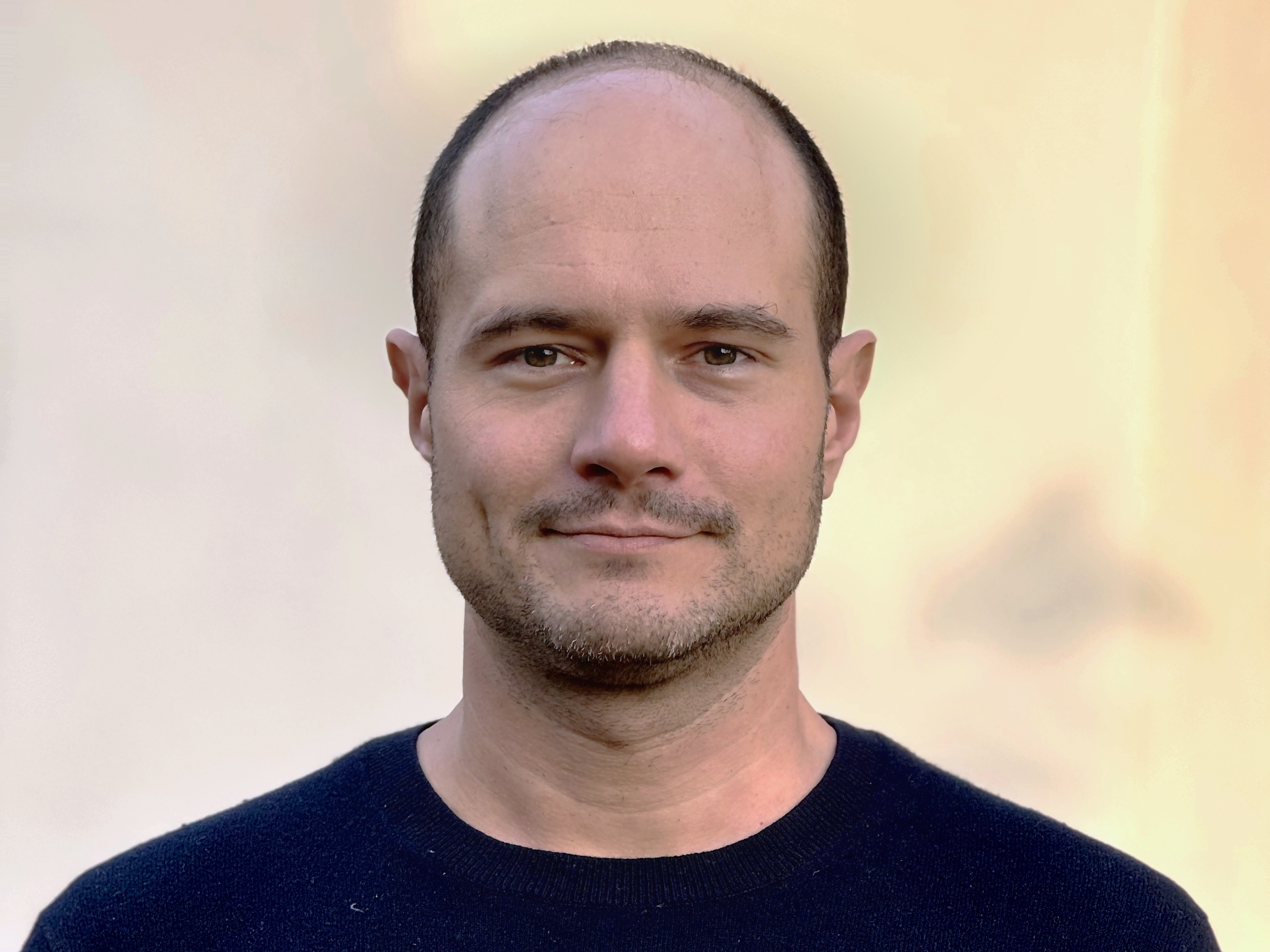
Romain Lacombe
AI Researcher, Science Founder, Deeptech Investor.
Currently working on:
- HCVC — venture partner covering bio and AI investments
- Distillate — agents orchestration for autonomous ML research
- Switchback — exercise science agent for ultratrail training
Publications
I research AI for science, with a focus on evals for reasoning models and biomolecular structure prediction. My interests span physical scales, from atmospheric sciences to materials discovery and molecular biology. Latest work:
- Don’t Think Twice! Over-Reasoning Impairs Confidence Calibration. Romain Lacombe, Kerrie Wu, Eddie Dilworth. ICML 2025 Workshop on Reliable and Responsible Foundation Models. [paper][code][slides]
- Non-canonical crosslinks confound evolutionary protein structure models. Romain Lacombe. Stanford workshop on experimental design in AI for Science, 2025. [paper][code][slides]
- Accelerating the generation of molecular conformations with progressive distillation of equivariant latent diffusion models. Romain Lacombe, Neal Vaidya. Generative and experimental perspectives for biomolecular design workshop, ICLR 2024. [paper][code][slides]
- AdsorbRL: deep reinforcement learning for inverse catalyst design. AI for accelerated materials design workshop, NeurIPS 2023. Romain Lacombe, Lucas Hendren, Khalid El-Awady. [paper][code]
- ClimateX: do LLMs accurately assess human expert confidence in climate statements? Romain Lacombe, Kerrie Wu, Eddie Dilworth. Tackling climate change with machine learning workshop, NeurIPS 2023. [paper][code][slides]
- Extracting molecular properties from natural language with multimodal contrastive learning. Romain Lacombe, Andrew Gaut, Jeff He, David Lüdeke, Kateryna Pistunova. Computational biology workshop, ICML 2023. [paper][code][slides]
- Improving extreme weather events detection with light-weight neural networks. Romain Lacombe, Hannah Grossman, Lucas Hendren, David Lüdeke. Tackling climate change with machine learning workshop, ICLR 2023. [paper][code]
Recent talks
- Calibrating LLM Confidence in the Science Domain, LawZero talk, March 2026. [slides]
- Limits of Reasoning Models in Science, Stanford SNAP Summer Talk, August 2025. [slides]
- Map, Model, Measure: AI for Biomolecules, Stanford Data Science, AI+Biomedicine Seminar, May 2025. [slides]
- Do LLMs Accurately Assess Human Expert Confidence in Climate Statements? Stanford Data Science, Sustainability Data Science conference, April 2025. [slides]
- AI Applications to Chemical Engineering, Cargnello group talk, Stanford, January 2024. [slides]
- MoleCL: Molecular Graph Contrastive Learning with Reactions-Inspired Augmentations, American Chemical Society, Fall 2023 Meeting. [slides]
About me
Things I've built
- I was the CEO and co-founder of Plume Labs, an atmospheric sciences company building micro-sensors for air pollution and deep learning models for air quality prediction. We received multiple industry awards, including the MIT Technology Review Innovators Under 35, the Red Dot Product Design award, Fast Company's Most Innovative Companies, and the American Meterological Society award for outstanding services by a corporation. Plume Labs was acquired by AccuWeather to spearhead its AI for weather and climate efforts. Today, our atmospheric forecasts power one in every four smartphones worldwide.
- From 2011 to 2014 I helped launch data.gouv.fr to open government data in my native France.
- I'm currently exploring AI agents for autonomous ML research, ultra trail training, smart lighting for chronobiology, and public health causal inference (coming soon).
Investing
- I am a venture partner at deeptech early stage fund HCVC. I back frontier technologies for human and planetary health, across clean energy and biosciences.
- My worldview: chemistry rules everything around us. I'm most excited about AI accelerating discovery in cells, molecules, and materials.
Background
- I studied Physics and Applied Mathematics at Ecole Polytechnique, Engineering Systems at MIT, and Chemical Engineering at Stanford.
- Ask me about the Pigeon Air Patrol — a flock of pigeons with GPS backpacks over London that got hundreds of millions of people to learn about air pollution.
- I like running in the mountains, chlorophyll, and Rayleigh scattering.